

1. Understanding IPv6 Subnetting
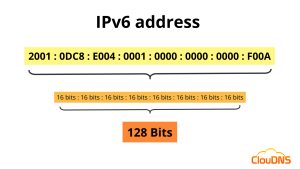
IPv6 subnetting differs significantly from IPv4. IPv6 addresses are 128-bit, written in hexadecimal format (e.g., 2001:db8:abcd:0012::1), allowing an almost unlimited address space.
Unlike IPv4, IPv6 subnetting focuses less on conserving addresses and more on:
-
Simplicity
-
Hierarchical design
-
Scalability
2. IPv6 Address Structure
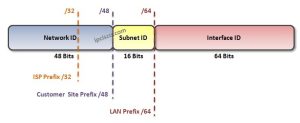
An IPv6 address typically consists of:
-
Global Routing Prefix – assigned by an ISP or RIR
-
Subnet ID – used by the organization
-
Interface ID – identifies the host
In most real-world deployments:
-
/64 is the standard subnet size
-
Each subnet contains 2⁶⁴ addresses
This allows features like Stateless Address Autoconfiguration (SLAAC) to function properly.
3. Common IPv6 Subnet Prefixes
| Prefix | Purpose |
|---|---|
| /48 | Organization-level allocation |
| /56 | Small to medium sites |
| /64 | Standard LAN subnet |
| /128 | Single host address |
Unlike IPv4, IPv6 does not use broadcast addresses. Instead, it relies on multicast and anycast for network communication.
4. Benefits of IPv6 Subnetting
IPv6 subnetting provides major advantages:
-
Practically unlimited address space
-
No need for NAT in most designs
-
Improved routing aggregation
-
Built-in support for security (IPsec)
-
Better support for modern networks (IoT, cloud, mobile)
5. IPv6 vs IPv4 Subnetting – Key Differences
| Feature | IPv4 | IPv6 |
|---|---|---|
| Address size | 32-bit | 128-bit |
| Typical subnet | Variable (/24, /26 etc.) | Fixed (/64) |
| Broadcast | Yes | No |
| NAT required | Often | Rarely |
| Scalability | Limited | Extremely high |