
1. What Is an IPv4 Subnet?
An IPv4 subnet is a logical subdivision of an IPv4 network that allows administrators to split a large network into smaller, more manageable segments. Subnetting improves network efficiency, reduces broadcast traffic, and enhances security by isolating network segments.
IPv4 addresses are 32-bit values, typically written in dotted decimal format (e.g., 192.168.1.1). These 32 bits are divided into:
-
Network portion
-
Host portion
Subnetting works by borrowing bits from the host portion to create additional network identifiers.
2. IPv4 Subnet Masks and CIDR Notation
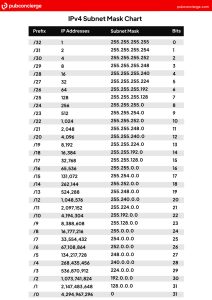
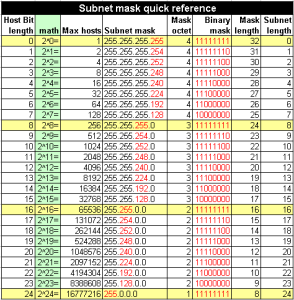
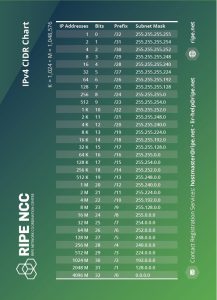
A subnet mask defines which bits belong to the network and which belong to hosts. It is also a 32-bit number, such as:
-
255.255.255.0 → /24
-
255.255.0.0 → /16
CIDR (Classless Inter-Domain Routing) notation simplifies subnet representation by specifying the number of network bits directly.
Common IPv4 Subnet Examples
| CIDR | Subnet Mask | Total IPs | Usable Hosts |
|---|---|---|---|
| /24 | 255.255.255.0 | 256 | 254 |
| /26 | 255.255.255.192 | 64 | 62 |
| /28 | 255.255.255.240 | 16 | 14 |
| /29 | 255.255.255.248 | 8 | 6 |
Note: In IPv4, the first address is the network address and the last address is the broadcast address, making them unusable for hosts.
3. IPv4 Subnetting Benefits
Subnetting IPv4 networks provides several advantages:
-
Efficient use of limited IPv4 address space
-
Reduced broadcast domains
-
Improved performance and fault isolation
-
Easier network management and troubleshooting
4. Private IPv4 Subnet Ranges
Private IPv4 subnets are commonly used in internal networks:
-
10.0.0.0/8
-
172.16.0.0/12
-
192.168.0.0/16
These ranges are not routable on the public internet and are typically used with NAT (Network Address Translation).